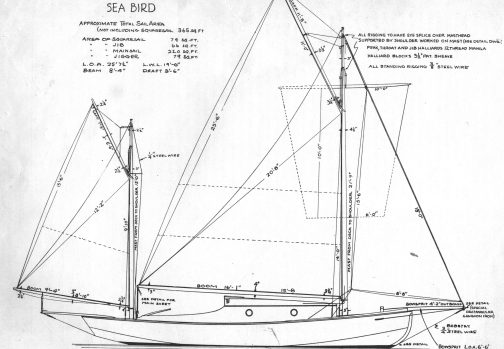
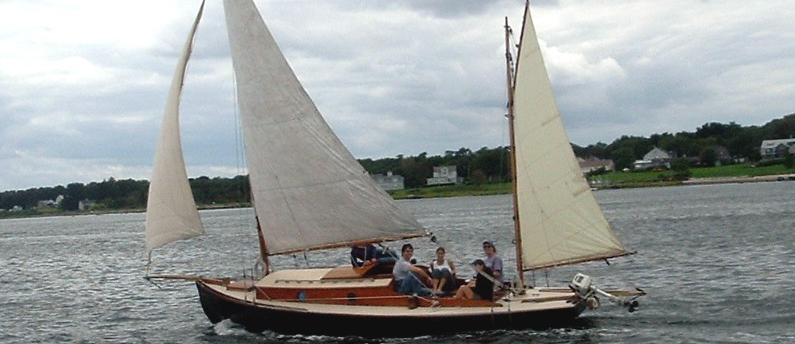
After planks were sprung at either end of Irene Agnes’ chine logs during our current restoration by Padanaram Boatworks, we began to grapple with the condition of the stem and transom. Both showed signs of still having original material, but also had been repaired with shortcuts using epoxy resin and 5200. This probably seemed like it paid off at the time, but it spites us now.
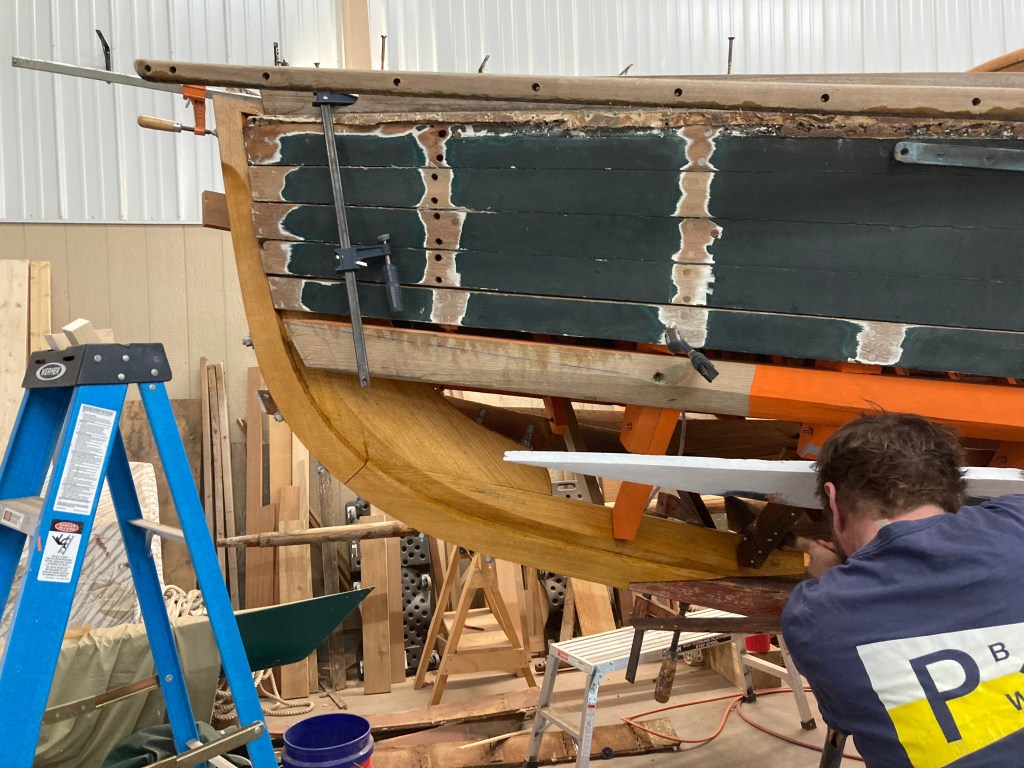
Stem
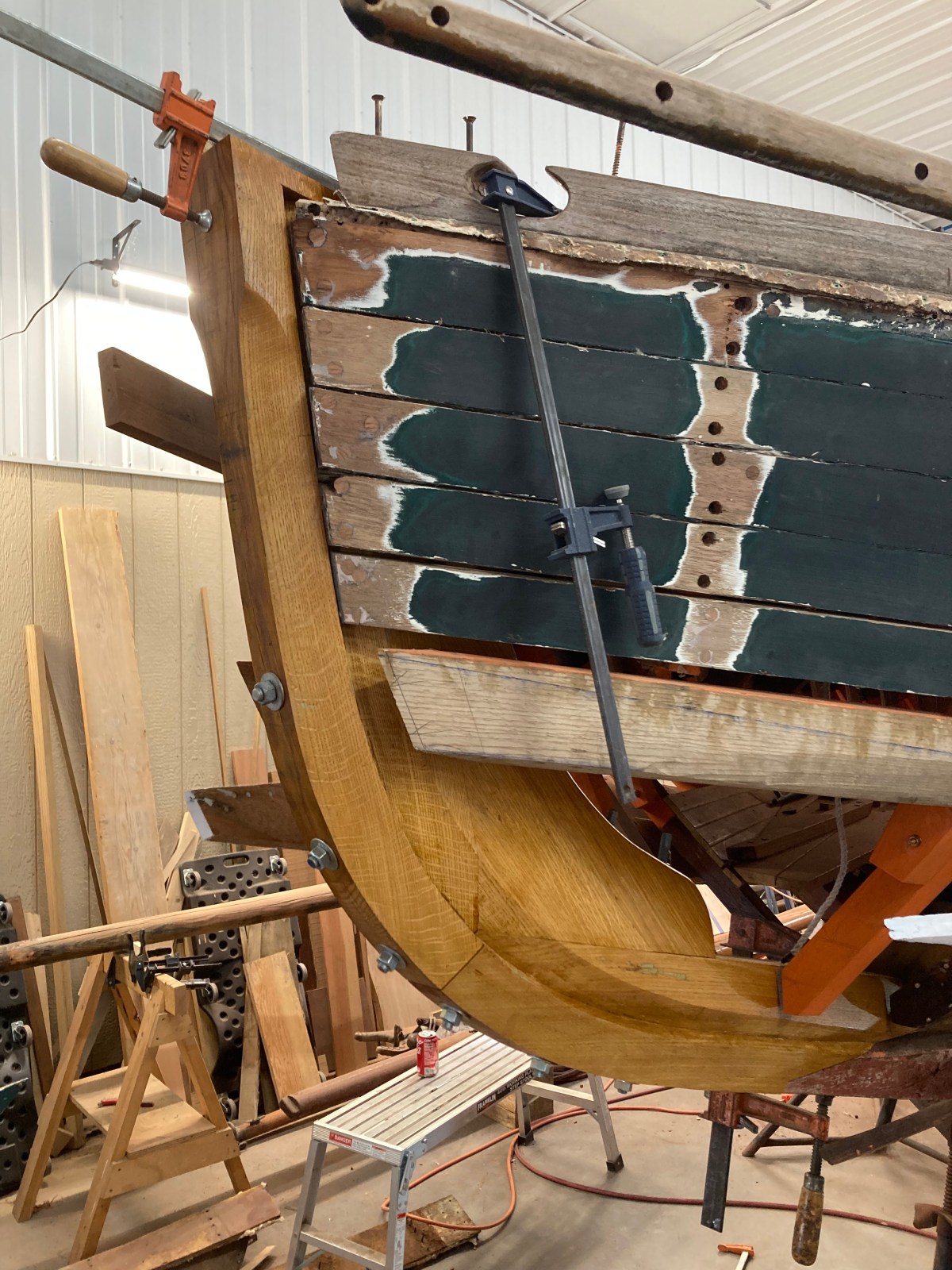
Parts of Aggie’s stem were likely original to the boat’s 1930s construction, but it was obvious repairs had occurred. At some point, a new section of the stem around the bobstay bolt had been scarfed into place. It was unclear whether this was the result of some damage, such as a collision, or to repair rot around a rusting bolt.
We had installed another new bobstay bolt in 2004, but the wood around it looked good, and the repaired section had held fine during our early sailing years. However, over the course of the boat’s time laid up, the scarfed piece was showing signs of movement relative to the surrounding stem. . Dave and Keith were still hopeful that the piece could be repaired, but once more planks were pulled, optimism dimmed.
Dave describes the situation here:
The forefoot looked original and was showing signs of decay. There wasn’t much to put planks back into. The stem knee was newer and in good shape, but it was no longer flush to the upper and lower stem sections – a potentially correctable problem except that epoxy filler had been used around the scarfed repair, and resin had gotten in between the stem sections and the knee. Planks had been fastened directly into the resin fill the upper stem. The whole thing would have to be cut apart to repair any one section, and it was unclear whether any piece would be able be saved. In the end, the time to take it apart in hopes of salvaging a part of it was likely to match building a new stem, and would still leave a possibly compromised part that could still leak or not take the plank ends.
So the whole stem came out. The original was used to loft a new stem.
Stern
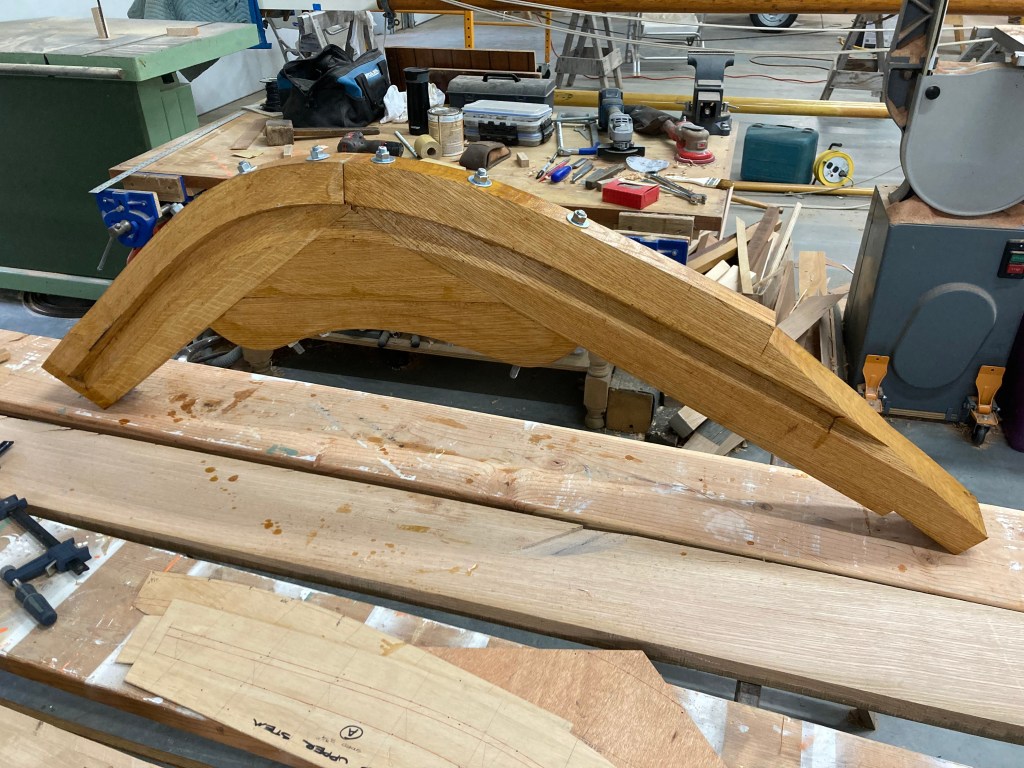
The situation at the transom had similar issues. The station framing and the transom itself was weirdly out of alignment and the clamp and chine actually ended short of the transom. At some point, everything seemed to have been just gooped together with 5200, making the whole thing a bear to remove. But it had to come off to level out the transom to take the new planks and chine logs properly, which meant building a new transom.
Dave describes the transom situation here:
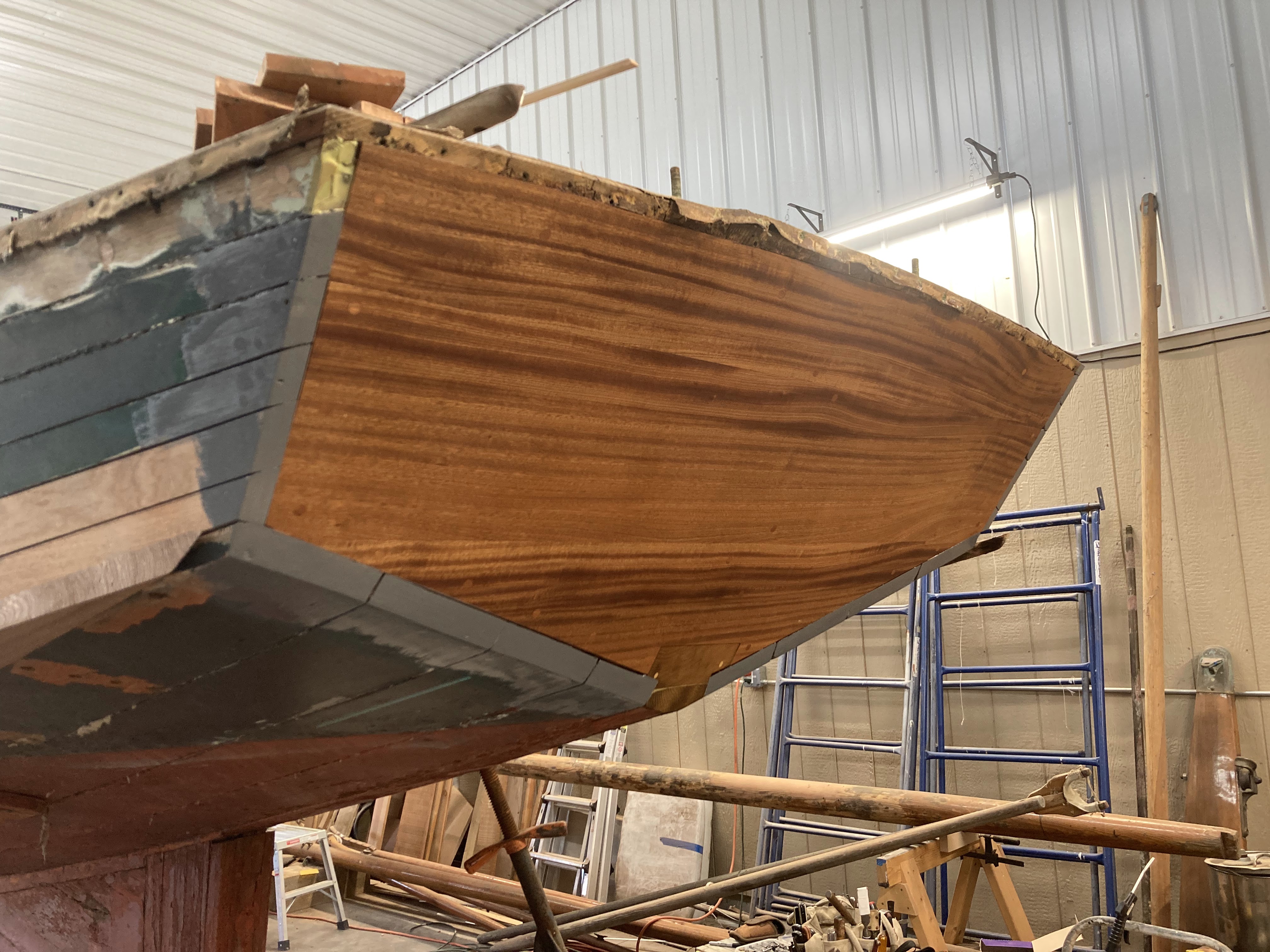
Both of these issues were significant setbacks and additions to the worklist, but we’re glad to have identified and resolved them properly at last.
Subscribe to be notified of new posts and other resource additions to the site:
 The Sea Bird Yawl
Leave a comment