The WoodenBoat Show at Mystic Seaport is happening this weekend, June 27-29. We had hoped to be there with Irene Agnes, but, sadly, a couple unexpected snags with both the boat and myself this spring have conspired to keep us from launching this summer.
Work on Aggie’s deadwood was delayed by an issue with the white oak timber we’d hoped to use, sending Dave and Keith back to the yards to source another piece. That alone might not have been a dealbreaker for launching this year, but I also learned that I have to have some surgery that’s going lay me up for the rest of the summer to recover. I definitely won’t be sailing for a few months, so there was no point in rushing the timber work.
The Right Deadwood
Replacing the deadwood had not originally been on the worklist, but we knew we needed to replace the rudder. After Dave lofted a new one, we discovered that Aggie’s draft was five inches shorter than the plans call for. This was something I’d long suspected, but have never actually measured.
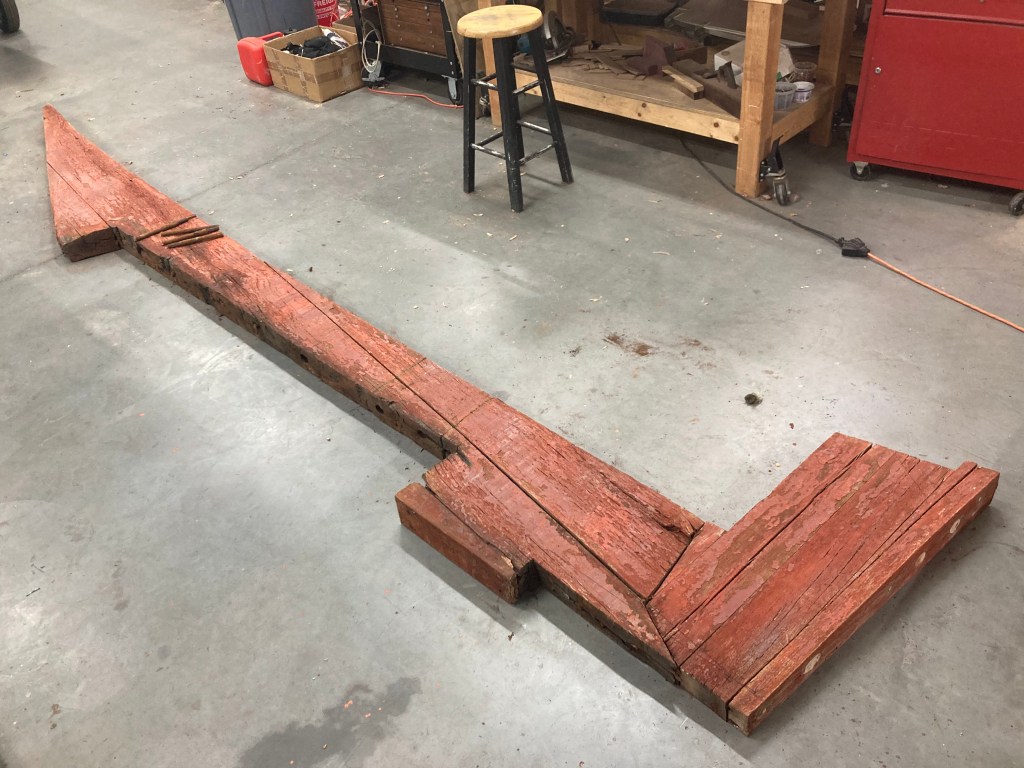
The removed old deadwood, reassembled on the shop floor. [Photo by Padanaram Boat Works]
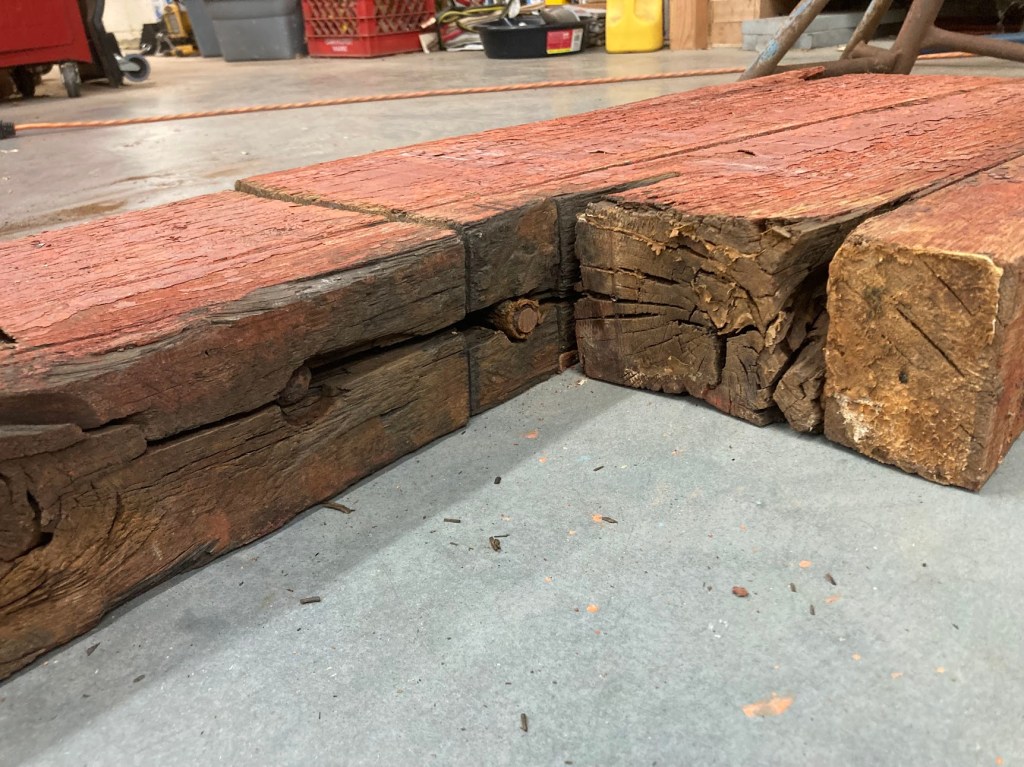
Restoring the draft would mean new deadwood, as the existing was in poor shape, and the iron ballast block was not only rusting badly but connected with steel keel bolts that were corroding away. We decided to pull the whole thing, put in new, properly sized deadwood and replace the old iron block with a lead cast ballast that will also match the plans.
A cross section of the deadwood where the iron ballast block was removed highlighted the problems. [Photo by Padanaram Boat Works]
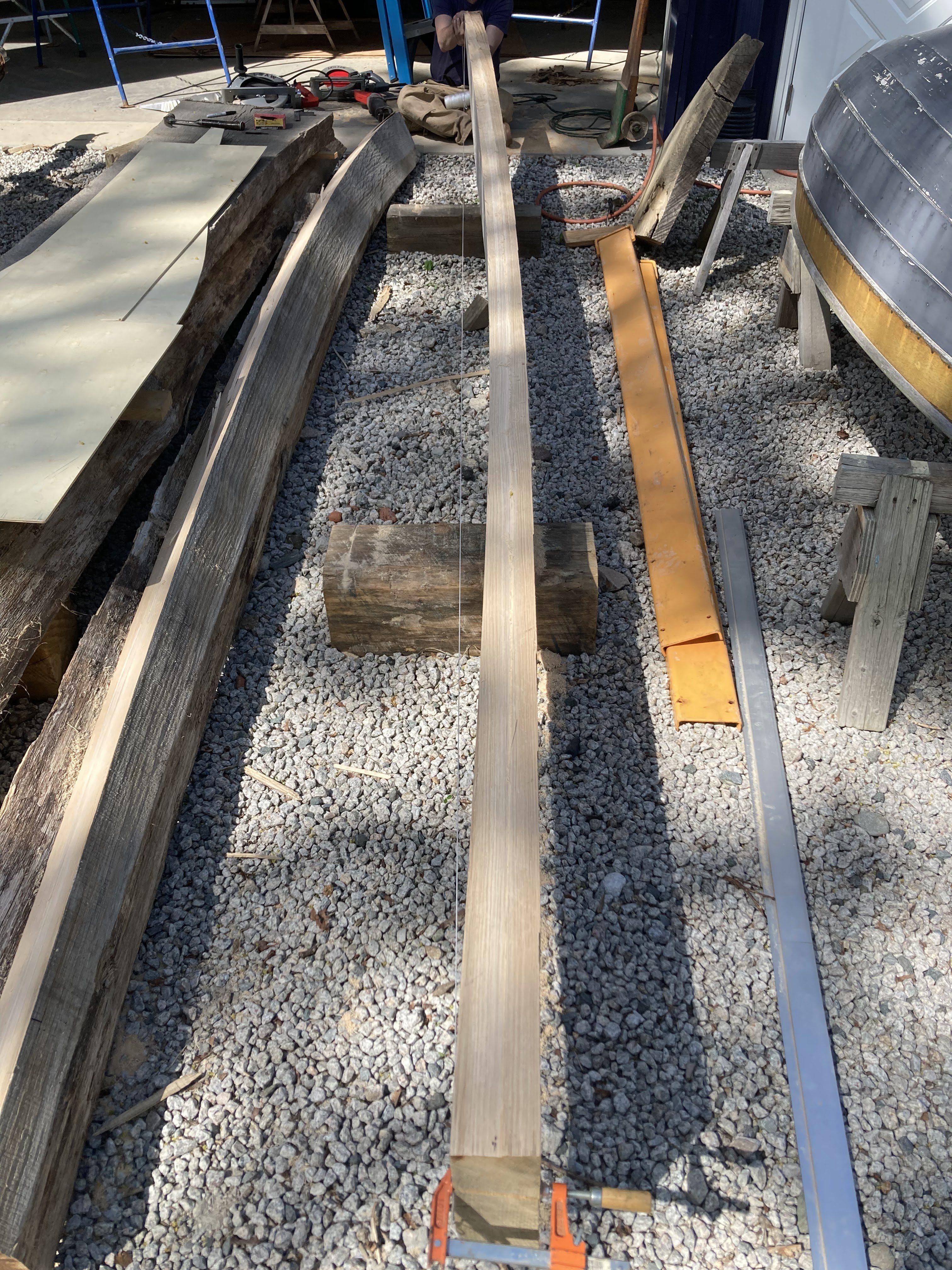
Dave and Keith found a gorgeous slab of white oak for the project, but when they started working it, it warped badly out of shape. The built-up tension in the wood deflected it 3 inches out of straight over its 16-foot length. One full-length piece cut from it was usable, and they’ve found another timber for the second. Smaller pieces needed to fill in bow and stern should be usable from one of the two slabs.
Measuring the warp on the 16-foot deadwood timber. [Photo by Padanaram Boat Works]
A Sea Bird Model
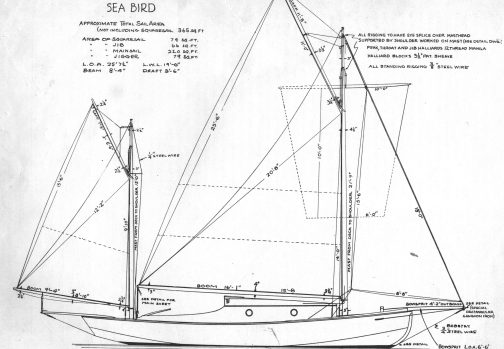
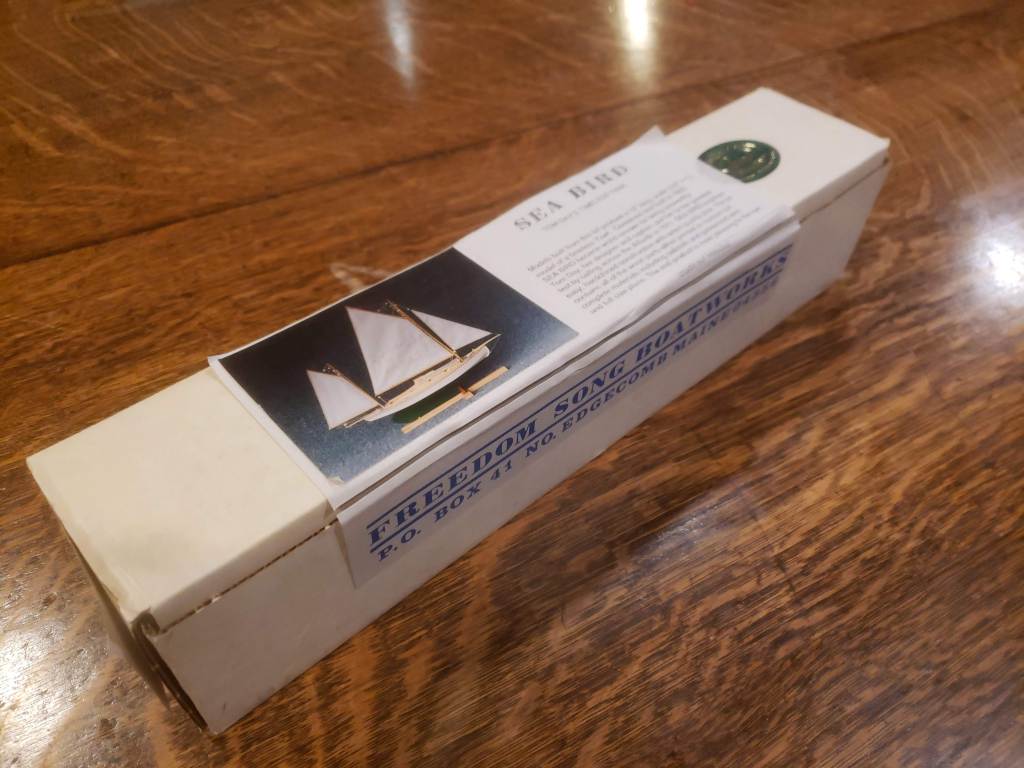
Although we can’t look forward to getting Irene Agnes in the water this summer, I’m turning my anticipation toward building a somewhat smaller Sea Bird this coming fall and winter. A while back on ebay, I acquired a 1/24 scale model kit for a Sea Bird Yawl.
These were made by the Freedom Song Boatworks in Maine but have been out of production for many years. Look for future posts on this side project later this summer and fall. I’ll definitely be calling on the experts I know at the USS Constitution Model Shipwright Guild for guidance on this next winter!
A New Bird in the Fleet
Lastly, I was excited to hear about the launch of a newly built Sea Bird yawl in Australia. Greg Wall’s Sea Bird, Trim, was included in the “Launchings” section of the latest issue of WoodenBoat (July/August 2025, #305). A full-keel, gaff-rigged version, Trim will be cruising around Victoria, Australia. I hope to reach out to Greg to learn more about his new Sea Bird for a future post.
Thomas Fleming Day founded and organized numerous yacht races, including some of the most famous offshore races, but he was quite clear about the limitations of the Sea Bird design: It was not going to win races.
“Now if you build her thinking you are going to get a boat that can sail match races with other boats of her length you are laying up disappointment,” he wrote. “She is not a fast boat, and no boat of her build and shape ever has been or ever can be.”
Unfortunately, Day did not live long enough to see a Sea Bird win its class in just the kind of offshore race that he had popularized – the St. Pete-Habana Yacht Race.
No, it was not our Irene Agnes, but one of the many other notable Sea Birds of the design’s history: Maralen II. And while not a match race, it was the just the kind of race to showcase the Sea Bird’s ability in a variety of offshore conditions.
Running down to Cuba
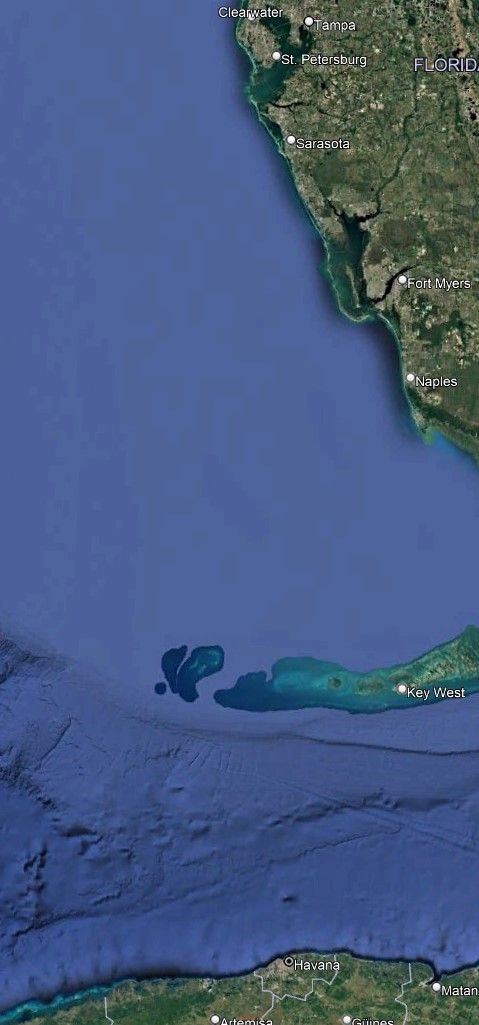
In 1930, just three years after Day died, the St. Petersburg Yacht Club on the Gulf Coast of Florida joined with the Habana Yacht Club in Cuba to start a race from St. Pete to Havana, a track of about 300nm. The race was the brainchild of George “Gidge” Gandy Jr., a Tampa developer whose father had built the first bridge across the bay to St. Petersburg. He saw the race as a promotion for the Tampa Bay region, still struggling through the Great Depression.
Havana had long been a popular destination for American yachts and sportfishermen, made more enticing by Prohibition. For yachtsmen managing to avoid the worst of the Depression, here was a warm-weather diversion that ended in a place where you could still get good rum.
St. Petersburg, FL to Havana, Cuba. [Google Earth]
The course itself also posed interesting racing challenges. After making their way out of Tampa Bay, the yachts sailed south toward the Florida Keys where decisions had to be made about where and how to pass among the islands and reefs. Once through or around the Keys, the race crossed the often-turbulent Gulf Steam to Cuba forcing the boats’ navigators to compensate for the current in order to arrive at Havana.
St. Pete’s Sea Bird
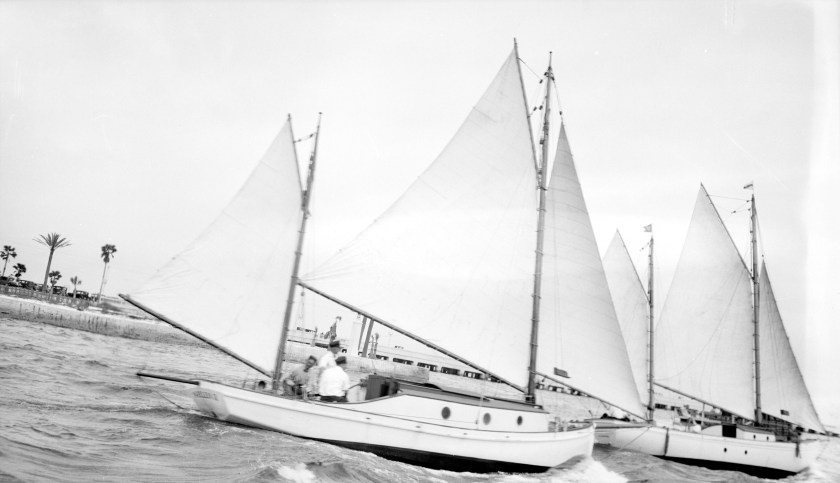
In March 1930, a group of 11 boats set off on the inaugural race. Among them was Maralen II, a Sea Bird yawl owned by Lew McMasters, then the Commodore of the St. Pete Yacht Club. According to stories passed down by the McMasters family, Maralen II placed third that year. She raced again for several years each year after.
Maralen II sailing out of the St. Pete yacht basin.
McMasters sold the boat prior to the ’32 race, but the new owner, Kent Curtis of Captiva, entered again in 1932 and ’33. In the 1932 race, after a passage dominated by light, shifting breezes, Maralen II beat out race organizer Gidge Gandy’s 36-foot yawl Cynosure by less than an hour on corrected time to win first place in Class B.
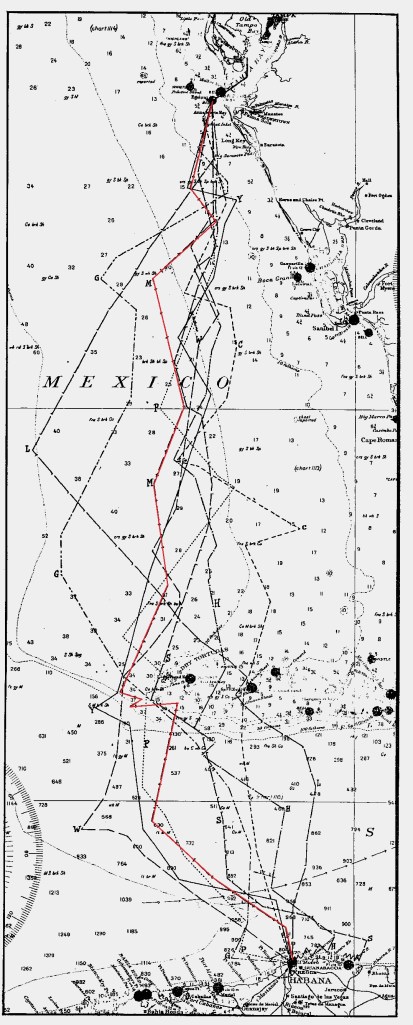
Curtis had opted to go west around the outside of the Dry Tortugas, cutting back close along the reef line before turning south to cross the Gulf Stream. Several other yachts in the race had opted to cut east of the Tortugas, hoping for a straighter line to Havana, but when the wind died halfway across, a couple of them were swept further east and had to beat their way back along the Cuban coast to get to the finish line. Curtis rode the Stream right back to Havana, making his Sea Bird the third of the nine boats to cross the line.
Tracks of the yachts in the 1932 St. Pete-Habana Race. Maralen II is in red. [Yachting magazine, June, 1932]
After a break during World War II, the St. Pete-Habana Yacht Race continued until the Cuban revolution in 1959 prevented further visits to the island. In 2017, the race was resurrected following the normalizing of relations with Cuba by the Obama administration, but it was short-lived. The Trump administration’s reversal of Cuban policy and the pandemic ended the annual race after 2019. The McMasters family remained active in the yacht club and the race throughout its history.
Racing Maralen II was just one of Kent Curtis’ adventures. He had been a WWI fighter pilot who was shot down and became a German prisoner until the end of the war. Wintering in Captiva, Florida, in the 1920s, he wrote a series of highly successful children’s adventure stories set in the Florida islands. A consummate outdoorsman, he spent his summers managing a summer camp that he owned in Minnesota, Camp Mishawaka, which still operates today. He died in Fort Myers, Florida in 1957.
Mysteries of Maralen II
Details of Maralen II’s history are unclear beyond her association with the race. She shows up in accounts and photos from the race in The Rudder, and in the history of the St. Pete Yacht Club. The McMasters family and their involvement in the race was the focus of a lot of press attention when the race was resurrected in 2017, but beyond mentions of Maralen II sailing in the race, the boat’s origin and fate do not appear. I have not tracked down when or to whom Curtis may have sold Maralen II.
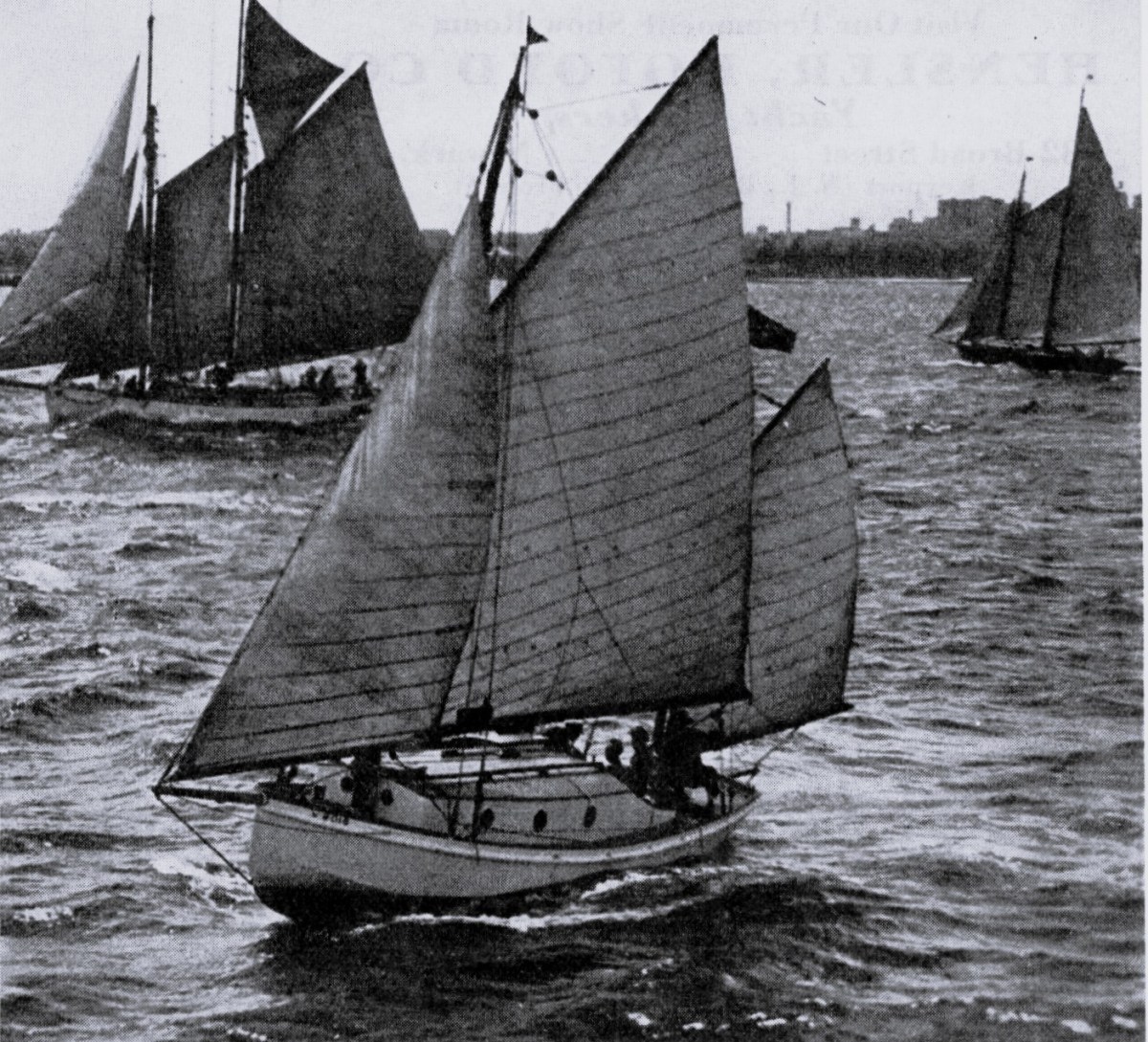
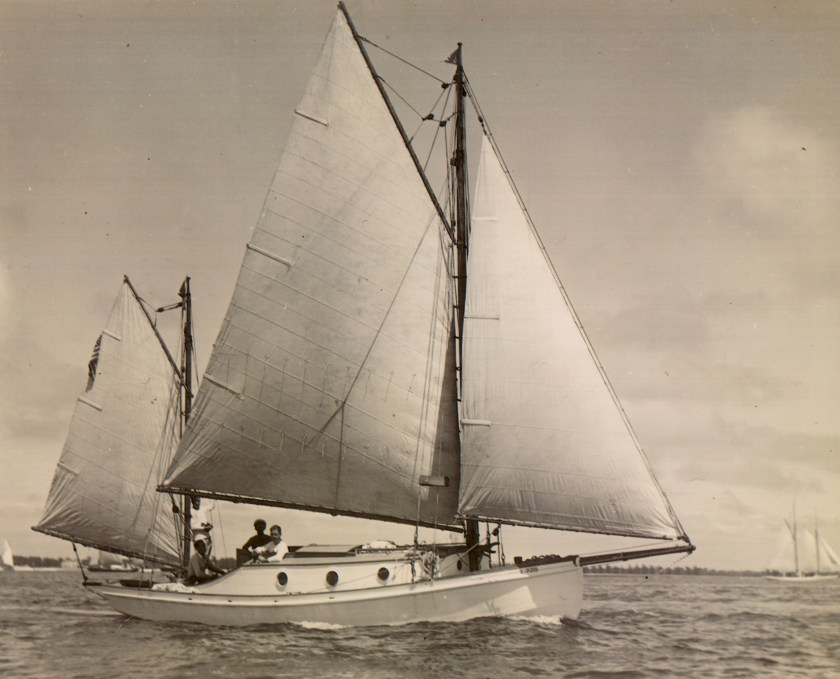
Maralen II in 1932.
Photos of the boat appear to show a Sea Bird built pretty well to design, at least as can be seen from the waterline up. Maralen II’s rig featured particularly deep-cut sails. Like a lot of Sea Birds, it appears she had a wider and taller housetop, providing additional room below and higher coamings around the cockpit. A toerail of several inches surrounds the deck with scupper holes at intervals.
Maralen II was definitely a notable Sea Bird, and I would love to learn more about the rest of the boat’s history, including who built her, where and when. I’m hoping to continue doing more research on her in the coming year and will update this post with any discoveries.
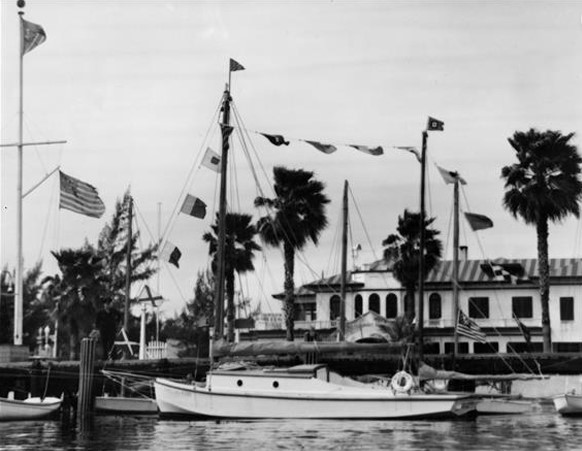
In the meantime, reviewing imagery from the St. Pete Yacht Club and the race in the 1930s has shown that there was a second Sea Bird at the club at the time. A Sea Bird with a lower housetop and a marconi mizzen appears dressed in flags in front of the club, and was present at the start of the 1932 race, but did not participate.
A second mystery Sea Bird adorns the St. Pete Yacht Club in the early 1930s.
If you have answers to any of these questions, please reach out. We’re eager to learn more about these Birds.
Subscribe to be notified of new posts and other resource additions to the site:
This is the story of a little wooden boat we found in a barnyard a long time ago and the continuing adventure she’s taken us on. The boat is a gaff-rigged yawl named Irene Agnes. No, we did not give her that name, but we could never change it. “Aggie”, as we affectionately call her, is a Sea Bird yawl – a design that dates back to 1901. Aggie herself dates back at least to the 1930s, and probably earlier.
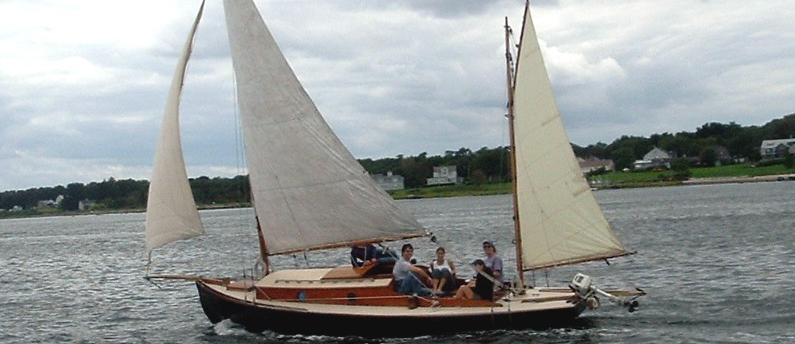
Irene Agnes on Narragansett Bay
If you’ve found this blog, you might already have some idea what a Sea Bird is, but when I stumbled on Aggie in an online ad in 2004, I’d only vaguely heard of the Sea Bird yawl. Laurie and I were living in Rhode Island, and I was just looking for a boat to play with on Narragansett Bay. Aggie ended up being an amazing boat to sail but also connected me to an incredibly rich history that has changed my life in more ways than I could have imagined.
The Sea Bird
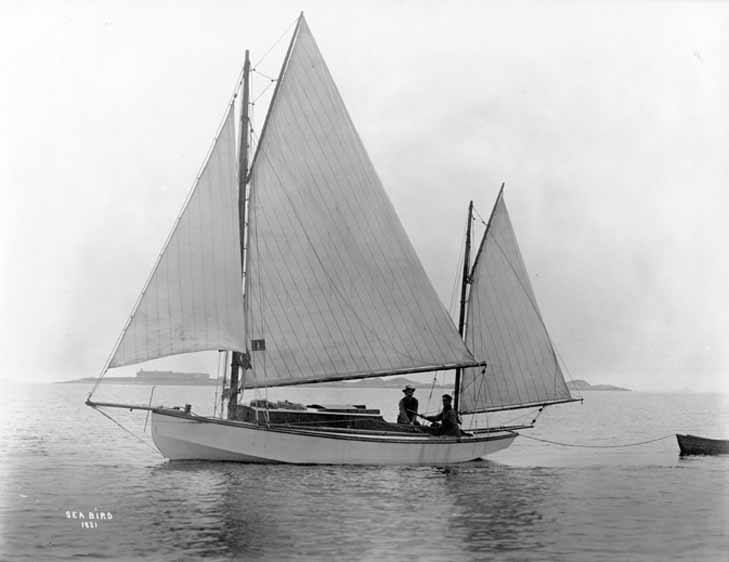
The original Sea Bird
The Sea Bird yawl was conceived in 1901 by Thomas Fleming Day, editor of The Rudder, America’s first recreational sailing and boating magazine, which Day founded in 1890. The plans were drawn by Charles Mower, the magazine’s design editor, and the construction drawings were created by Larry Huntington, a New York boatbuilder who built the first hull, named Sea Bird. They published the design in the magazine, sold plans, and, later, a detailed “how-to-build” book.
In a gilded age when yachting was dominated by wealthy industrialists with professional crews, Tom Day believed that middle-class people could and should go out and have adventures on small boats that they sailed themselves. The Sea Bird was designed to meet that need in a simple boat that was relatively easy to build yet capable of seagoing voyages. To prove it, Day took Sea Bird on dramatic voyages, recounting the details of the boat’s performance in The Rudder. In 1910, he and two other crew sailed Sea Bird across the Atlantic from Rhode Island to Italy.
Sea Bird‘s exploits helped make the design hugely successful, but because Day never controlled who built the boat or how, he and Mower never really made money off it in the way that most yacht designers did. No one knows how many Sea Birds have been built in the last 124 years, but it became an iconic design synonymous with the democratization of yachting.
Irene Agnes Finds Us
Irene Agnes is certainly part of that story. Originally built in Grosse Point, Michigan, the keel may have been laid in 1914, but it is not clear that she ever got underway until about 1933. A previous owner managed to track down titles and registrations for the boat going back nearly that far. Aggie’s long story from Michigan to Massachusetts includes detours through Maine and Maryland and is fodder for another post.
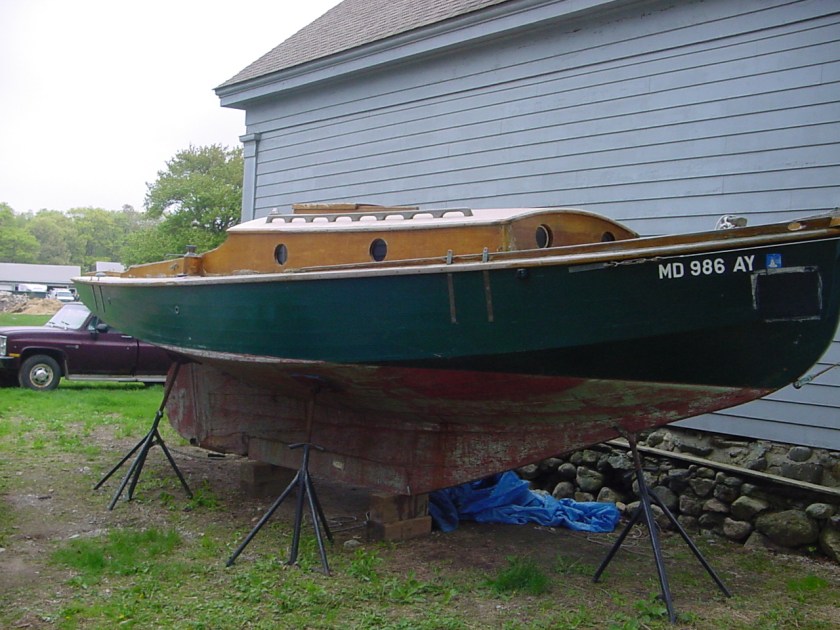
We found her in a barnyard in Scituate, Massachusetts in 2004, but the coincidences surrounding that story made it seem as though she found us (more on that later). She was obviously a solid boat that had been extensively refurbished in the late-1980s but had developed some issues – mostly resulting from poor maintenance by the owners who had acquired her in 2001. We bought her for nearly nothing, and with the help of a wooden boat shop in Mattapoisett, we did the minimum that was needed to get Aggie back in the water.
Irene Agnes in the Scituate barnyard where we found her (2004).
Underway, she quickly lived up to the promise of her design. With her full keel and gaff-rig, she was incredibly stable, balanced yet very handy and versatile. In howling conditions, she could sail perfectly well under jib and mizzen. The boat can be single-handed; accommodates two overnight and four comfortably on daysails. With its less than 4-foot draft, we had a blast exploring Narragansett Bay with friends.
Me and The Old Man
At the same time, owning Aggie compelled me to dive deeper into the history of Thomas Fleming Day, The Rudder and the original Sea Bird design. His mission of bringing sailing adventure to regular people and teaching them the skills to do it resonated with me. I had sailed extensively growing up in South Florida before running off to sea on a tall ship, where I met Laurie. After several years teaching traditional seamanship and navigation on sailing ships full-time, I had taken a shore job as the editor of a series of nautical almanacs and pilot books used mostly by cruising sailors. It was that desk job that had prompted me to find a boat of our own to play on.
In 2008, I went back to school for a graduate degree in maritime history, which I figured would give me the best of both worlds – sailing as well as teaching on shore. At Mystic Seaport that summer, I researched and wrote about Tom Day, combing through hundreds of back issues of The Rudder as well as his books and boat plans in the museum’s archives.
Nicknamed “The Old Man”, Day manifested a curmudgeonly personality in the pages of The Rudder, holding forth on all sorts of topics in the burgeoning boating community at the turn of the century. At the heart of it all, however, was his deeply held belief that there was profound value in going to sea on a boat that you sailed yourself.
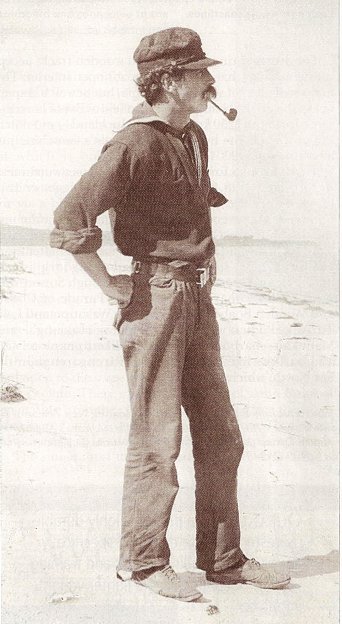
Thomas Fleming Day in 1889, the year before he founded The Rudder.
Learning the self-sufficiency of seamanship made one a better person, Day argued. At the same time, he embraced the romance of the sea – that something intangible about being on the open ocean enlivened the human spirit. In between writing how-to treatises on boat handling, he penned books of poetry about the sea. I’ve often imagined that he and Jimmy Buffett would have been fast friends had they lived at the same time.
Irene Agnes Returns
Discovering Tom Day shaped the direction of my academic career, but being back in school in the aftermath of the 2008 recession also left little time or money for Aggie. We eventually laid her up in 2011, imagining she’d be back in a couple years. However, life never goes quite the way you expect, and before we knew it, she’d been on the hard for more than a decade.
At one point, at the beginning of the pandemic,we put her up for sale and contemplated donating her somewhere. There was little interest though, and we were struggling to commit to the idea anyway.
Last year, we decided it was time to get back to sailing for fun again. Now living on Cape Cod, Laurie and I both still work in maritime-related professions but are not on the water ourselves as much for work anymore and desperately missed it. We knew no other boat would ever be as unique, interesting or fun to sail as our little Aggie, so she’s gone into the shop for a major restoration.
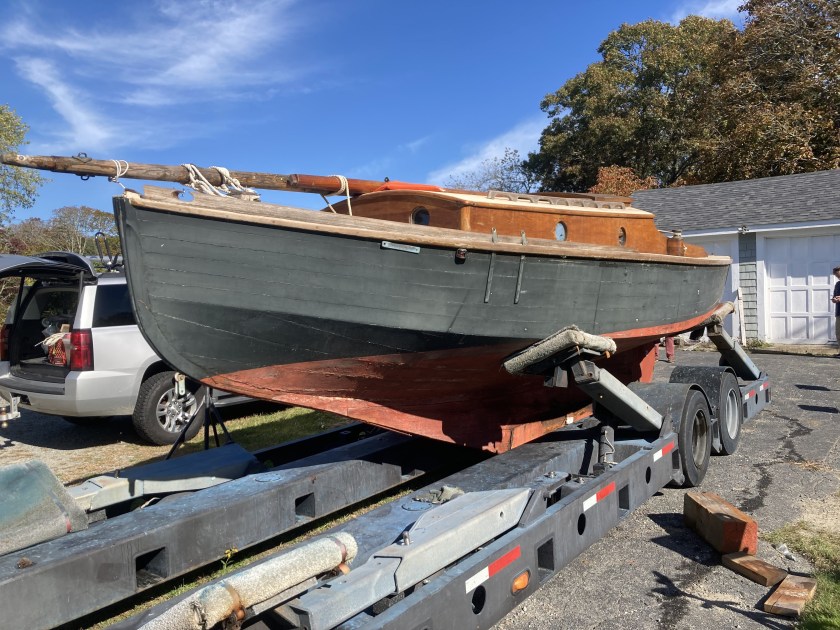
Aggie begins the voyage from yardbird back to Sea Bird.
This time, we’re doing all the things we skipped over 20 years ago, as well as making up for a dozen years of largely deferred maintenance. With the incredible work of Dave Strecker and Keith Brown at Padanaram Boatworks in Portsmouth, Rhode Island, Aggie is getting set up for another 90 years of sailing adventures. She’s set to launch this spring (2025).
I’ve started this blog to share Aggie’s history and restoration, but also to uncover the stories of other Sea Birds as well as explore Thomas Fleming Day and the Sea Bird design itself. Reach out through our contact page if you’ve got a Sea Bird story or question.
Subscribe for notifications of future posts, uploaded resources and links to videos.
 The Sea Bird Yawl
Leave a comment