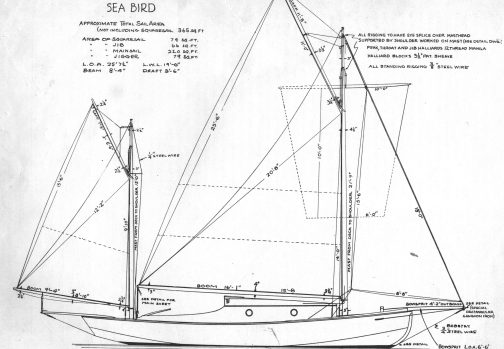
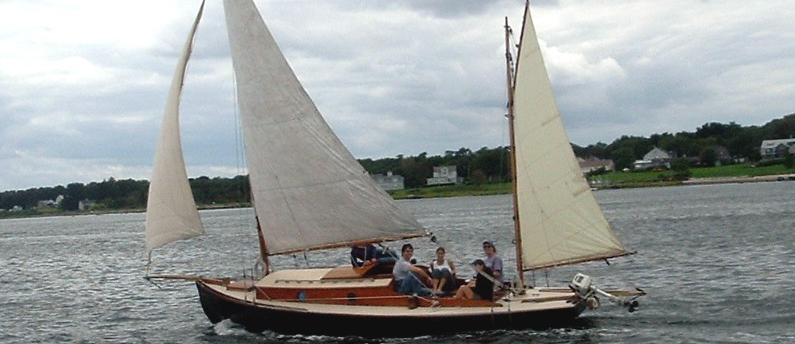
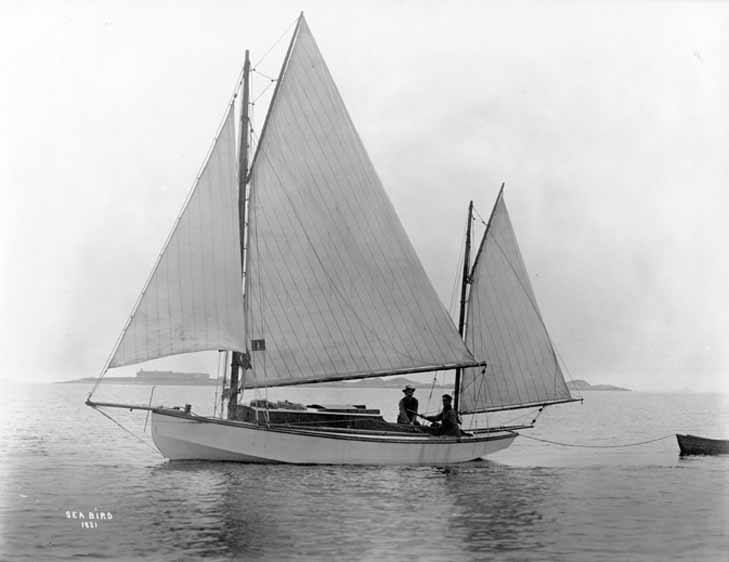
Thomas Fleming Day founded and organized numerous yacht races, including some of the most famous offshore races, but he was quite clear about the limitations of the Sea Bird design: It was not going to win races.
“Now if you build her thinking you are going to get a boat that can sail match races with other boats of her length you are laying up disappointment,” he wrote. “She is not a fast boat, and no boat of her build and shape ever has been or ever can be.”
Unfortunately, Day did not live long enough to see a Sea Bird win its class in just the kind of offshore race that he had popularized – the St. Pete-Habana Yacht Race.
No, it was not our Irene Agnes, but one of the many other notable Sea Birds of the design’s history: Maralen II. And while not a match race, it was the just the kind of race to showcase the Sea Bird’s ability in a variety of offshore conditions.
Running down to Cuba
In 1930, just three years after Day died, the St. Petersburg Yacht Club on the Gulf Coast of Florida joined with the Habana Yacht Club in Cuba to start a race from St. Pete to Havana, a track of about 300nm. The race was the brainchild of George “Gidge” Gandy Jr., a Tampa developer whose father had built the first bridge across the bay to St. Petersburg. He saw the race as a promotion for the Tampa Bay region, still struggling through the Great Depression.
Havana had long been a popular destination for American yachts and sportfishermen, made more enticing by Prohibition. For yachtsmen managing to avoid the worst of the Depression, here was a warm-weather diversion that ended in a place where you could still get good rum.
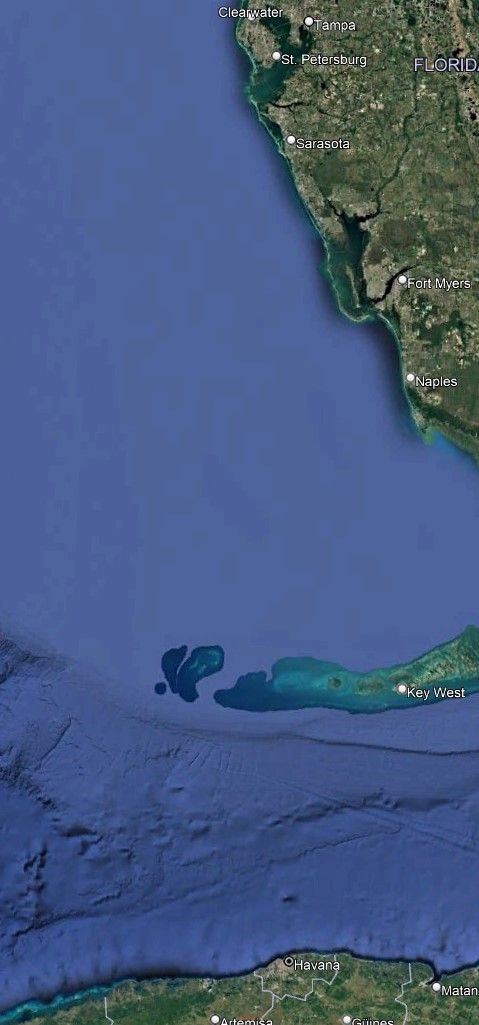
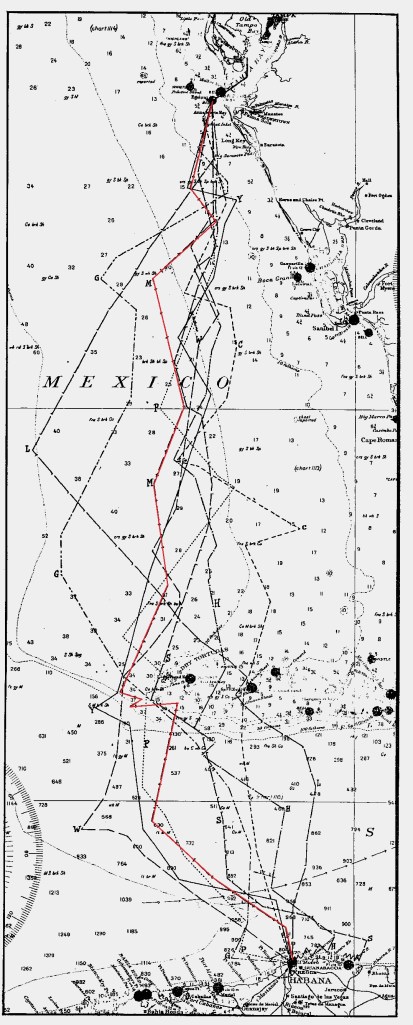
The course itself also posed interesting racing challenges. After making their way out of Tampa Bay, the yachts sailed south toward the Florida Keys where decisions had to be made about where and how to pass among the islands and reefs. Once through or around the Keys, the race crossed the often-turbulent Gulf Steam to Cuba forcing the boats’ navigators to compensate for the current in order to arrive at Havana.
St. Pete’s Sea Bird
In March 1930, a group of 11 boats set off on the inaugural race. Among them was Maralen II, a Sea Bird yawl owned by Lew McMasters, then the Commodore of the St. Pete Yacht Club. According to stories passed down by the McMasters family, Maralen II placed third that year. She raced again for several years each year after.
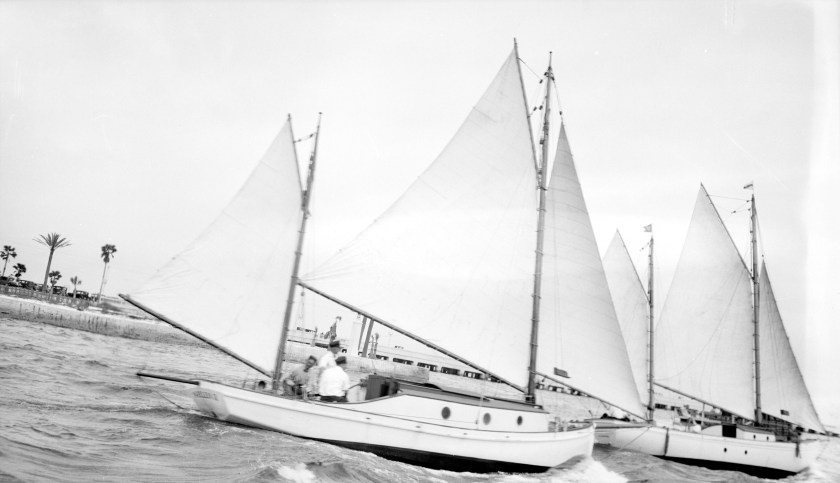
McMasters sold the boat prior to the ’32 race, but the new owner, Kent Curtis of Captiva, entered again in 1932 and ’33. In the 1932 race, after a passage dominated by light, shifting breezes, Maralen II beat out race organizer Gidge Gandy’s 36-foot yawl Cynosure by less than an hour on corrected time to win first place in Class B.
Curtis had opted to go west around the outside of the Dry Tortugas, cutting back close along the reef line before turning south to cross the Gulf Stream. Several other yachts in the race had opted to cut east of the Tortugas, hoping for a straighter line to Havana, but when the wind died halfway across, a couple of them were swept further east and had to beat their way back along the Cuban coast to get to the finish line. Curtis rode the Stream right back to Havana, making his Sea Bird the third of the nine boats to cross the line.
After a break during World War II, the St. Pete-Habana Yacht Race continued until the Cuban revolution in 1959 prevented further visits to the island. In 2017, the race was resurrected following the normalizing of relations with Cuba by the Obama administration, but it was short-lived. The Trump administration’s reversal of Cuban policy and the pandemic ended the annual race after 2019. The McMasters family remained active in the yacht club and the race throughout its history.
Racing Maralen II was just one of Kent Curtis’ adventures. He had been a WWI fighter pilot who was shot down and became a German prisoner until the end of the war. Wintering in Captiva, Florida, in the 1920s, he wrote a series of highly successful children’s adventure stories set in the Florida islands. A consummate outdoorsman, he spent his summers managing a summer camp that he owned in Minnesota, Camp Mishawaka, which still operates today. He died in Fort Myers, Florida in 1957.
Mysteries of Maralen II
Details of Maralen II’s history are unclear beyond her association with the race. She shows up in accounts and photos from the race in The Rudder, and in the history of the St. Pete Yacht Club. The McMasters family and their involvement in the race was the focus of a lot of press attention when the race was resurrected in 2017, but beyond mentions of Maralen II sailing in the race, the boat’s origin and fate do not appear. I have not tracked down when or to whom Curtis may have sold Maralen II.
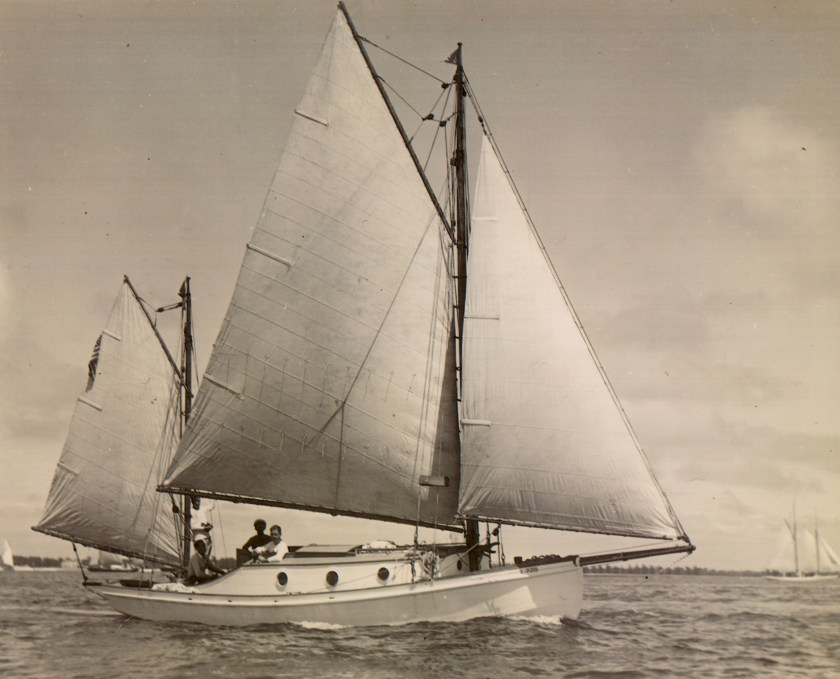
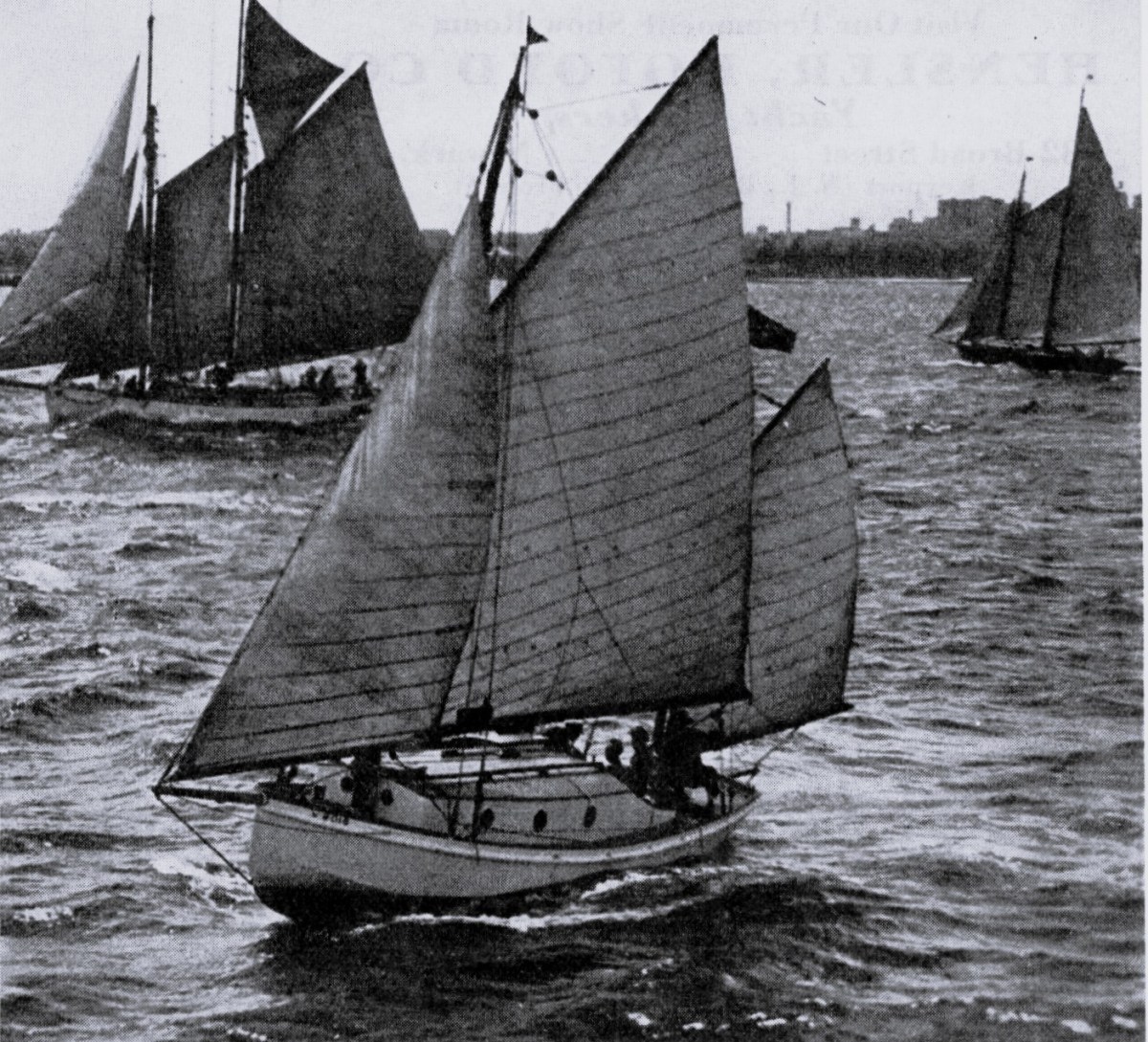
Photos of the boat appear to show a Sea Bird built pretty well to design, at least as can be seen from the waterline up. Maralen II’s rig featured particularly deep-cut sails. Like a lot of Sea Birds, it appears she had a wider and taller housetop, providing additional room below and higher coamings around the cockpit. A toerail of several inches surrounds the deck with scupper holes at intervals.
Maralen II was definitely a notable Sea Bird, and I would love to learn more about the rest of the boat’s history, including who built her, where and when. I’m hoping to continue doing more research on her in the coming year and will update this post with any discoveries.
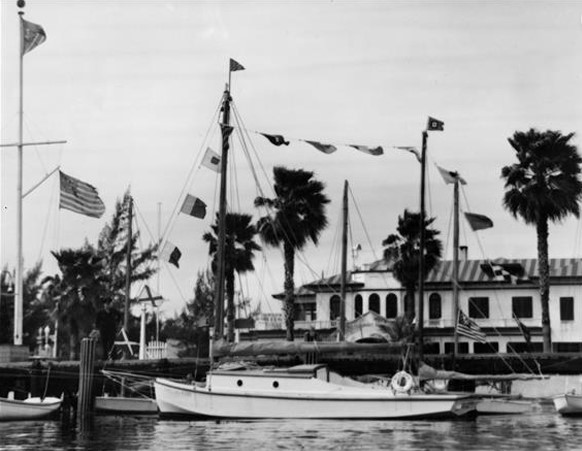
In the meantime, reviewing imagery from the St. Pete Yacht Club and the race in the 1930s has shown that there was a second Sea Bird at the club at the time. A Sea Bird with a lower housetop and a marconi mizzen appears dressed in flags in front of the club, and was present at the start of the 1932 race, but did not participate.
If you have answers to any of these questions, please reach out. We’re eager to learn more about these Birds.
Subscribe to be notified of new posts and other resource additions to the site:
 The Sea Bird Yawl
Leave a comment